Coastal North Carolina provides a long breeding window for blood-feeding parasites due to sustained humidity and dense vegetation. Properties bordering tidal creeks in Landfall, shaded lots near Greenfield Lake Park,…
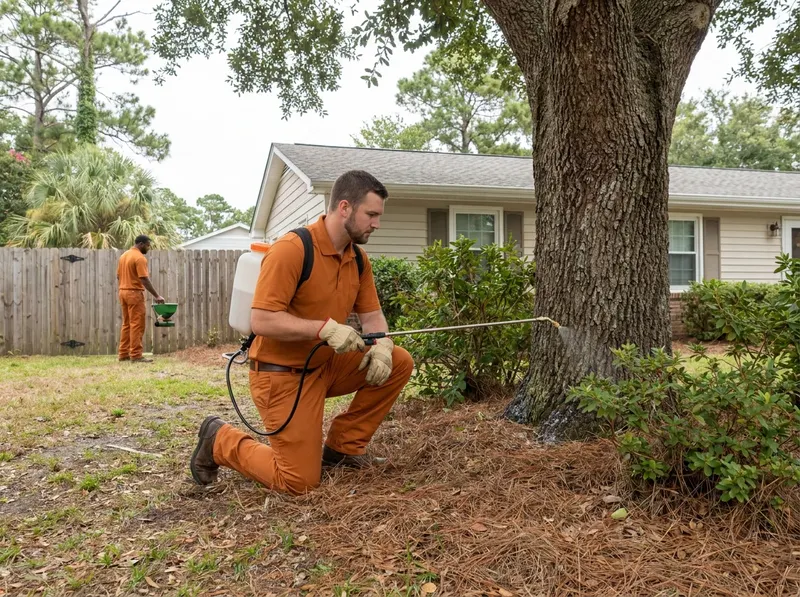
Coastal North Carolina provides a long breeding window for blood-feeding parasites due to sustained humidity and dense vegetation. Properties bordering tidal creeks in Landfall, shaded lots near Greenfield Lake Park, or mature pine straw beds in Pine Valley and Forest Hills frequently support dense populations of deer ticks and cat fleas. Unlike simple indoor aerosol applications that only eliminate visible adult pests, professional environmental control applies scientific insect growth regulators along shaded moisture zones, under low decking, and around natural perimeter buffers to halt the reproductive cycle before larvae mature into biting adults.
Outdoor defense requires precision treatment around high-traffic zones without disrupting household routines. In communities like Monkey Junction, Sunset Park, and Silver Lake, sandy soil conditions allow flea pupae to shelter beneath shaded canopy lines and mulch borders. Treatments focus directly on target harborage sites—such as pet run paths, fence lines, and foundation plantings along River Road and Ogden—using targeted products designed to dry cleanly and bond to ground cover. No long-term multi-year contracts are required, providing flexible single-event knockdowns or seasonal barrier maintenance tailored to property size and vegetative density.
Every job gets a firm, written price after a free on-site visit.
Tell us about your flea & tick environmental control job in Wilmington and we'll send a clear, written quote — usually the same day.
 Bug Barrier Control Services