Securing reliable pest control service in Wilmington requires specialized barrier treatments engineered specifically for humid tidal environments and sandy coastal soil. Subterranean termites, American cockroaches, Norway rats, and aggressive biting mosquitoes thrive across New Hanover County due to persistent riverfront moisture and long growing seasons.
No forms — call now for a fast, no-pressure quote.
📞 Call (252) 224-8580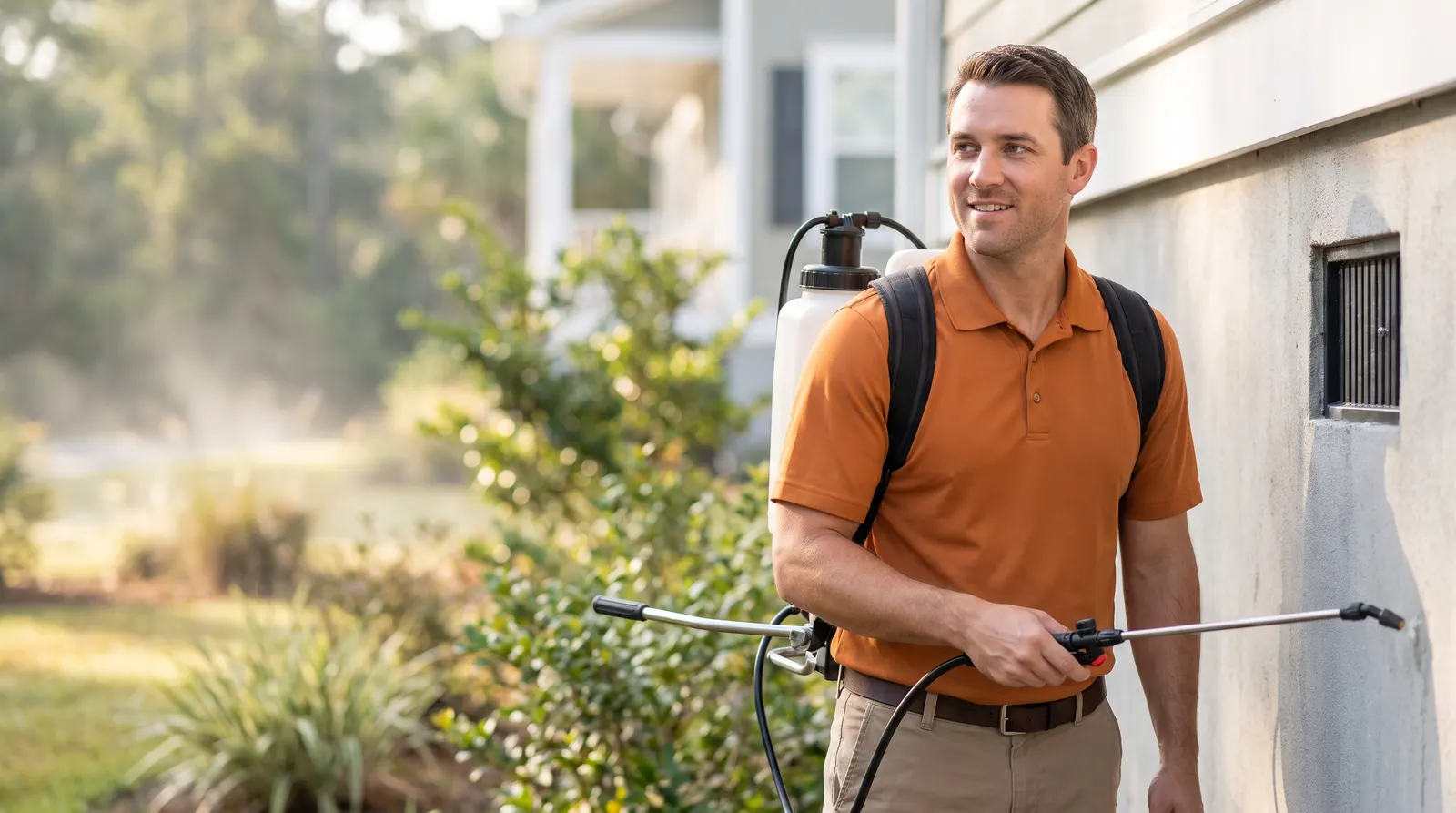
Professional pest control service in Wilmington, NC is a specialized residential and commercial extermination process that eliminates active wood-destroying insects, structural roaches, biting vectors, and rodents using targeted barrier applications and non-repellent formulations starting at $250.
Every service reflects the same meticulous attention to detail — whether it's a single job or a larger pest control service project across Wilmington.
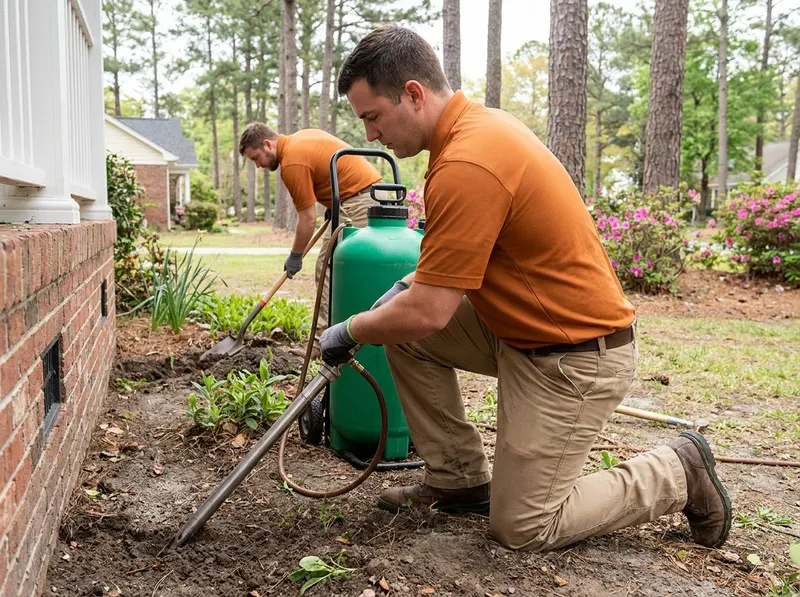
Subterranean termite treatments protect structural framing, band sills, and foundation piers from Eastern subterranean termites (Reticulitermes flavipes). Technicians dig continuous 6-inch by 6-inch perimeter trenches along exterior foundation walls and drill through attached concrete slabs to inject liquid non-repellent termiticides such as fipronil directly into the soil. For properties built over damp crawl spaces in low-lying sections of New Hanover County, technicians apply disodium octaborate tetrahydrate directly onto exposed floor joists and subflooring wood to create an unpalatable barrier that halts active feeding. Termite bait stations equipped with chitin synthesis inhibitors are installed at 10- to 20-foot intervals around the property line, allowing foraging worker termites to transfer active control agents back to subterranean queens and systematically collapse the entire colony network within 60 to 90 days.
View details →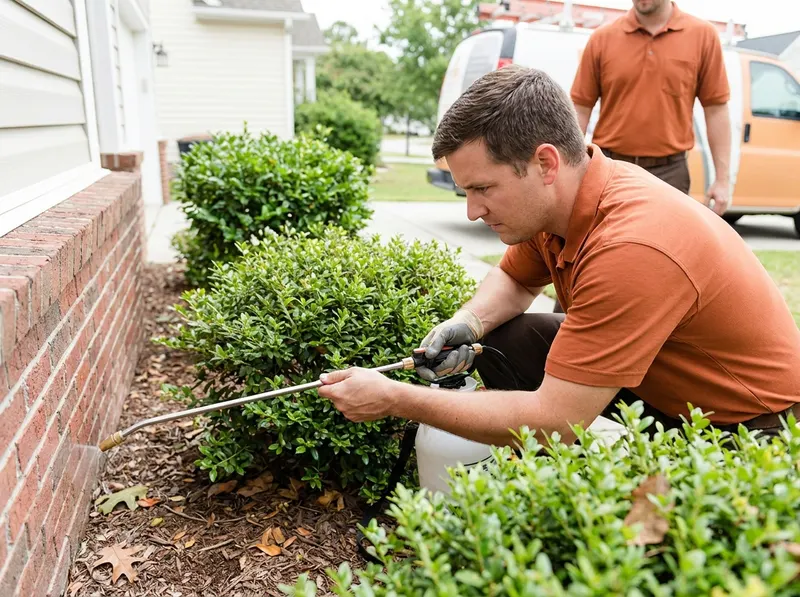
Cockroach and palmetto bug elimination targets large American cockroaches (Periplaneta americana), smokybrown cockroaches, and prolific indoor German cockroaches (Blattella germanica). Rather than relying on airborne broadcast sprays that cause indoor contamination, technicians place micro-beads of abamectin or indoxacarb gel bait inside inaccessible electrical chases, underneath kitchen sink cabinetry, behind major appliances, and inside wall voids where roaches harbor during daylight hours. High-potency insect growth regulators (IGRs) like pyriproxyfen or hydroprene are simultaneously dispersed into structural voids to disrupt the molting cycle, rendering developing nymphs sterile and preventing reproductive resurgence. Exterior treatments focus on sealing weep holes, weatherstripping exterior doors, and applying synthetic pyrethroid granules to damp pine straw beds and foundation mulch lines where outdoor roaches breed.
View details →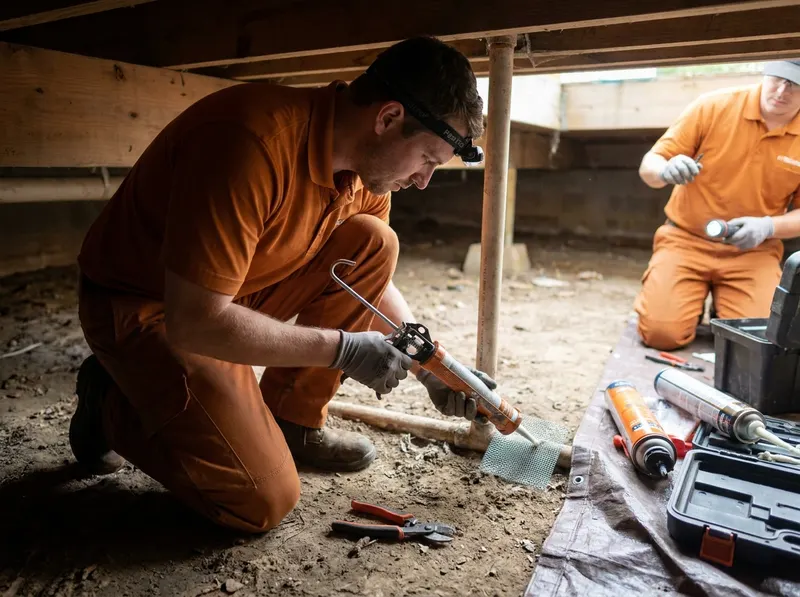
Crawl space and attic rodent exclusion permanently halts intrusions by Norway rats (Rattus norvegicus), roof rats (Rattus rattus), and house mice (Mus musculus). Technicians inspect the entire building envelope from the foundation footer up to the roofline, identifying any gnawed access points, open crawl space foundation vents, unsealed air conditioning line-set chases, and roof return gaps. All structural openings larger than 0.25 inches are permanently sealed using 19-gauge galvanized steel hardware cloth, copper mesh stuffing, and elastomeric structural caulking that rodents cannot chew through. Inside crawl spaces and attic insulation zones, technicians deploy heavy-duty mechanical snap traps and multi-catch chambers in secured stations to quickly remove nesting populations without using toxic baits that risk rodent death inside hidden wall cavities.
View details →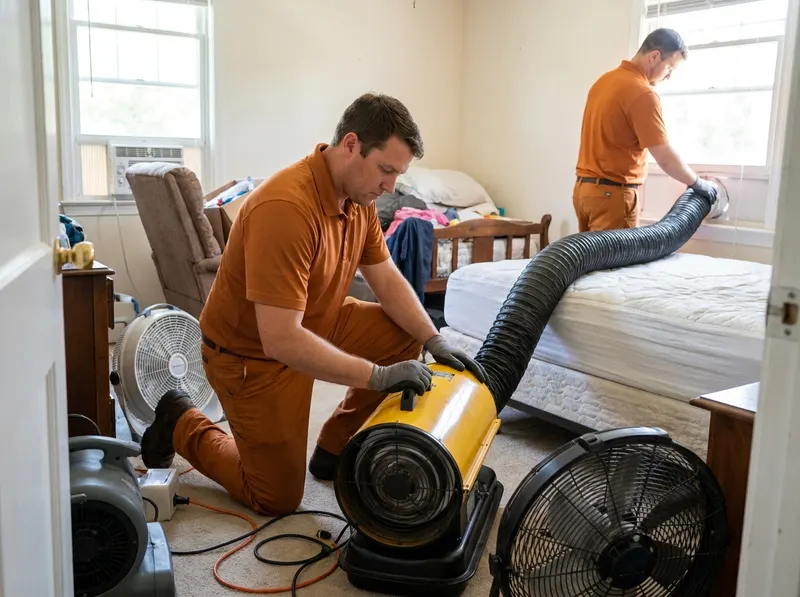
Thermal bed bug remediation provides single-day eradication of bed bugs (Cimex lectularius) across residential properties, rental cottages, and multi-family units. Technicians utilize industrial high-output electric and indirect-fired heating units paired with high-velocity air movers to gradually raise ambient room temperatures to a lethal threshold between 122°F and 135°F. This sustained thermal level penetrates deep into mattress seams, box springs, hardwood flooring joints, baseboard moldings, and electrical outlet boxes, denaturing proteins in adult bed bugs, emerging nymphs, and unhatched eggs simultaneously. Technicians follow the thermal sweep by applying amorphous silica gel desiccant dust into wall voids, behind switch plates, and under bed frame supports to provide long-term residual defense against future introductions without emitting chemical odors.
View details →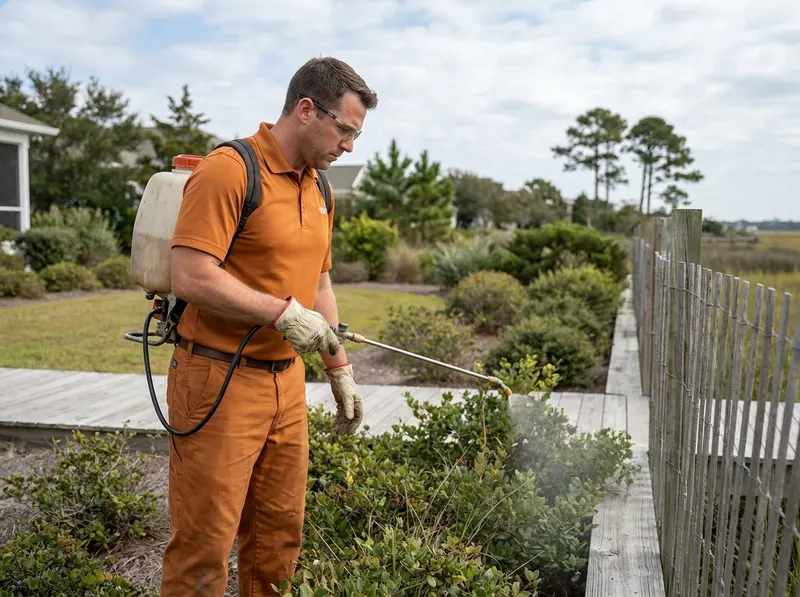
Coastal mosquito barrier reduction controls biting populations of Asian tiger mosquitoes (Aedes albopictus) and salt marsh mosquitoes (Aedes sollicitans) in humid coastal environments. Certified technicians use motorized backpack misters to apply microencapsulated adulticides and botanical repellents directly to the undersides of dense ornamental foliage, broadleaf shrubs, perimeter tree canopies, and tall ground covers where adult mosquitoes rest during daytime heat. Technicians simultaneously inspect all property drainage zones, gutters, catch basins, birdbaths, and exterior decorative pottery to eliminate stagnant water pockets. Active standing water reservoirs that cannot be drained receive applications of biological Bacillus thuringiensis israelensis (BTI) larvicide dunks, which specifically destroy developing mosquito larvae within 24 hours without harming birds, aquatic wildlife, or pollinating insects.
View details →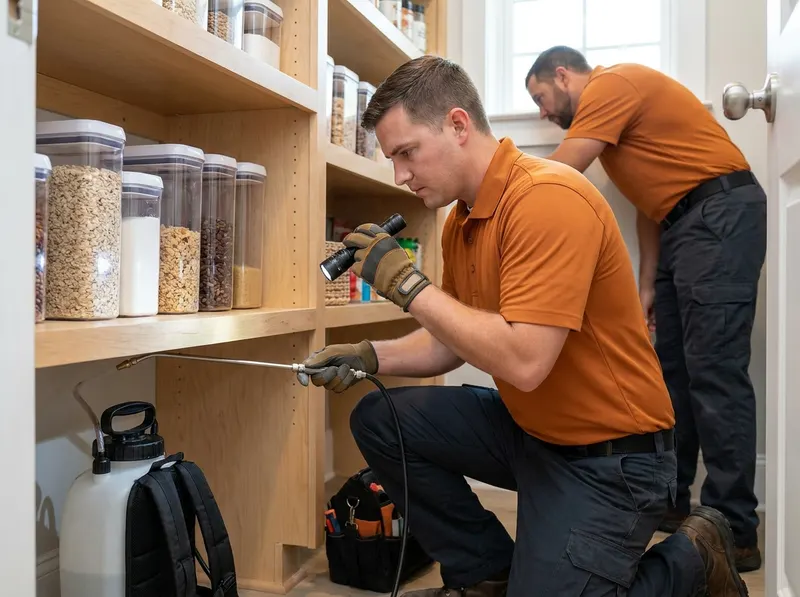
Pantry pest and stored product eradication eliminates destructive infestations of Indian meal moths (Plodia interpunctella), sawtoothed grain beetles (Oryzaephilus surinamensis), and confused flour beetles from residential food storage areas. Technicians thoroughly inspect dry food containers, pet kibble bags, and spice racks to identify the primary breeding source, which is removed and discarded. Technicians clean and vacuum all shelving corners, shelf peg holes, and cabinet joints to extract resting pupae, larvae, and spilled organic matter. Crack-and-crevice applications of low-toxicity botanical insecticides and insect growth regulators are applied strictly into structural cabinet joints, accompanied by species-specific pheromone sticky monitoring traps that capture wandering adults and provide ongoing surveillance against secondary hatchings.
View details →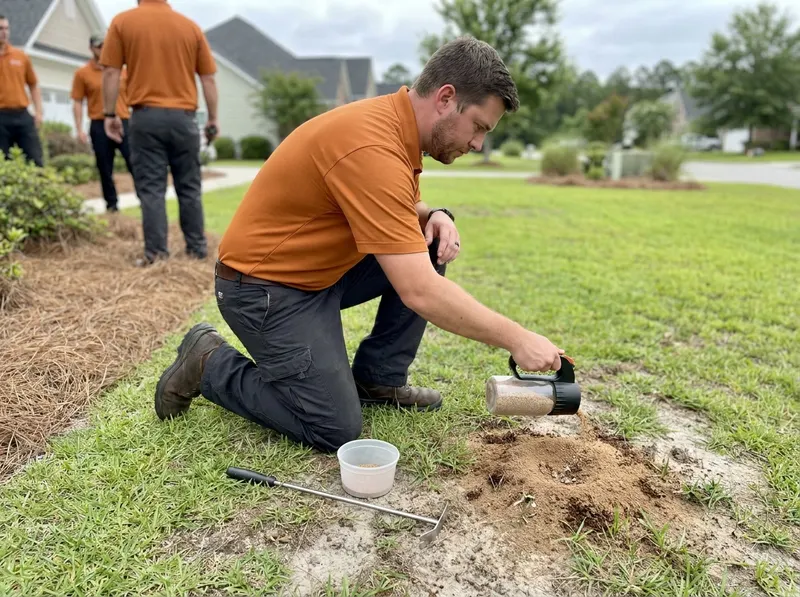
Fire ant mound and turf protection eradicates aggressive imported red fire ants (Solenopsis invicta) across residential lawns, sand dunes, and ornamental landscapes. Technicians broadcast insect growth regulator baits containing hydramethylnon or methoprene across the entire turf area when worker ants are actively foraging, allowing them to carry the active bait directly into underground chambers to feed developing larvae and the queen. For active, dangerous mounds situated near walkways, patios, or children's play areas, technicians perform direct mound injections using liquid residual contact insecticides that penetrate up to 3 feet into subterranean sand chambers, achieving complete mound knockdown within several hours. Annual broadcast programs establish durable perimeter turf protection that stops migrating colonies from establishing satellite mounds.
View details →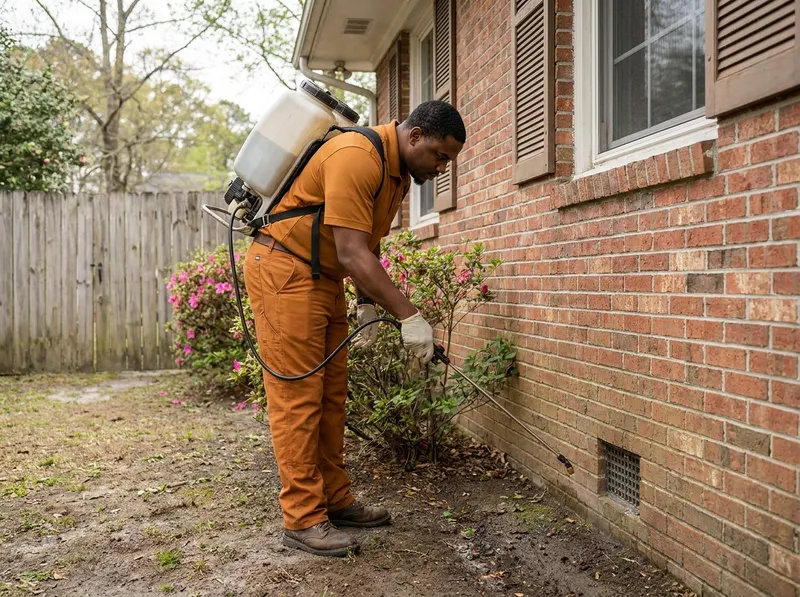
Seasonal perimeter defensive spraying creates a multi-layered protective envelope around home foundations to block spiders, centipedes, millipedes, earwigs, and silverfish before they enter living quarters. Technicians apply microencapsulated exterior liquid barriers 3 feet up the exterior masonry foundation and 5 feet out across surrounding soil, gravel, and mulch beds. Exterior door thresholds, window frames, plumbing penetrations, and soffit vents receive direct precision spot applications to eliminate crawl pathways. Technicians use specialized extension poles to sweep away exterior spider webs, wasp nesting attempts, and egg sacs from eaves, gutters, and porch overhangs, ensuring continuous structural protection against seasonal pest invasions driven by changing outdoor humidity and temperatures.
View details →Professional pest control service in Wilmington, NC is a specialized residential and commercial extermination process that eliminates active wood-destroying insects, structural roaches, biting vectors, and rodents using targeted barrier applications and non-repellent formulations starting at $250.
You get a firm, itemized quote for your pest control service before any work begins — no surprises, no pressure.
Careful prep, tidy work, and a full cleanup when we are done. We treat your home and belongings like our own.
The same trusted, background-checked team from the first call to the final check.
If live German cockroaches, biting bed bugs, or localized pantry pests are actively spreading inside living areas, select immediate targeted thermal remediation or precision non-repellent gel extraction. If subterranean termites, carpenter ants, or powderpost beetles threaten structural joists, choose comprehensive liquid perimeter trenching and crawl space borate timber applications. If rats or squirrels have penetrated attic insulation or subfloor cavities, implement physical mechanical exclusion combined with bi-directional interior trapping. The primary operational trade-off centers on initial barrier installation labor versus ongoing seasonal perimeter maintenance: one-time targeted knockdowns clear isolated active colonies inside a single room, whereas whole-structure perimeter defense systems, subterranean soil barriers, and crawl space encapsulation treatments require higher upfront labor to prevent coastal humidity pests from re-entering damp framing over multi-year periods.
Every project gets a firm, written price after a free on-site visit. Ranges below for orientation.
Tell us about your pest control service job and we'll send a clear, written quote — usually the same day. Or just call and talk to a real Wilmington pro.

Wilmington's high water table and sandy soil accelerate subterranean termite pressure, particularly in historic pier-and-beam properties near the Cape Fear Riverwalk and older brick-pier foundations in Sunset Park and Forest Hills. Dense summer humidity around Greenfield Lake Park, Poplar Grove Plantation, and the tidal salt marshes off River Road causes smokybrown roaches, palmetto bugs, and Asian tiger mosquitoes to reproduce rapidly from April through October. Crawl spaces throughout older neighborhoods frequently sustain humidity levels above 70 percent, creating ideal breeding chambers for wood-decay fungi, powderpost beetles, and Norway rats seeking refuge from seasonal tropical storms along the Atlantic coastline. Effective extermination across New Hanover County requires precise non-repellent soil barriers, crawl space moisture defense, and targeted microencapsulated exterior applications rather than generic indoor baseboard sprays.
 Bug Barrier Control Services